1 Medicare-certified hospice and palliative care providers in Loma Linda, San Bernardino County, California.
Sourced from CMS Provider Data Catalog (Hospice General Information & CAHPS Hospice Survey), with websites and visitor ratings from Google Places — last refreshed 2026-05-27. Listings are not paid. We don't accept payment from hospices to appear on this directory or to rank higher.
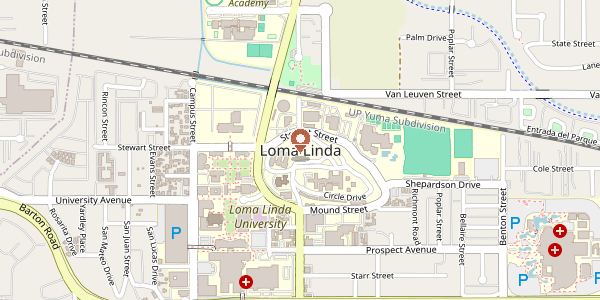
Pins reflect the filters above. Click any pin to see the hospice details.
No hospices match your filters.
Picking the right hospice is one of the harder decisions families make, often under time pressure. A few things to weigh as you compare providers in this directory:
Every hospice on this page holds a current CMS Certification Number (CCN). That ensures they bill under the Medicare hospice benefit and meet federal Conditions of Participation. Always verify the CCN if you're researching outside this directory.
The CMS CAHPS Hospice Survey rating reflects how family caregivers rated their experience — communication, timeliness, pain management, emotional support. A higher rating is a good signal, but smaller hospices often show Not rated just because they don't have enough survey responses, not because care is worse.
Hospice care is more than nurse visits — it's a promise that someone is reachable when symptoms escalate at 2 a.m. Ask how the on-call nurse triage works, who comes after hours, and how often visits are scheduled at the patient's stage of care.
Most hospices serve patients at home, in assisted-living, and in skilled-nursing facilities. Some have their own inpatient units for general inpatient (GIP) care when symptoms can't be controlled at home. Ask what's available and what's contracted.
Good hospice teams treat the family as part of the unit of care. Look for explicit offerings around caregiver support, respite care, social work, chaplaincy, and 13 months of bereavement support after the patient's death — those are Medicare-required components, but how they're delivered varies a lot in practice.
Google reviews are useful colour but unverified — they can be left by anyone. The Medicare CAHPS rating is from validated family caregiver surveys with standardized questions. Both have value; weigh them together rather than picking one.
Yes. Medicare Part A covers the full cost of hospice care for eligible patients — doctor and nursing services, medical equipment, medications related to the terminal illness, short-term inpatient care, respite care for family caregivers, and bereavement support for the family. There is typically no out-of-pocket cost to the patient apart from small copays on outpatient drugs (capped at $5) and respite stays.
A patient becomes eligible for hospice when two physicians — the attending physician and the hospice medical director — certify a life expectancy of six months or less if the illness runs its normal course. The patient must also choose to focus on comfort care rather than curative treatment for the terminal illness.
There is no fixed limit. Medicare hospice benefits are split into an initial 90-day period, a second 90-day period, and then unlimited 60-day periods, each with a face-to-face recertification by the hospice team. Patients who improve can be discharged and re-enrolled later if their condition declines again.
Most hospice care happens wherever the patient calls home — a private residence, an assisted-living community, a skilled nursing facility, or a hospice's own inpatient unit. Care is brought to the patient by an interdisciplinary team that includes nurses, physicians, social workers, chaplains, aides, and volunteers.
Anyone can initiate a hospice referral — a physician, a discharge planner, a family member, or the patient themselves. A hospice nurse will do an evaluation visit; the attending physician and hospice medical director then formally certify eligibility.
Palliative care is symptom-focused supportive care that can begin at any stage of a serious illness, alongside curative treatment. Hospice is a specific Medicare benefit for patients in the final phase of life who are no longer pursuing curative care. Both share the same focus on comfort, dignity, and family support — hospice is one form of palliative care.
Useful questions: How quickly can you start care after admission? Is a nurse available 24/7 by phone, and who comes after hours? What is the average caseload per nurse? How will pain and symptoms be managed in the first 48 hours? What support do you offer the family? Do you have inpatient beds for general inpatient (GIP) care? What is your Medicare CAHPS rating and what does it reflect?
No. This is an independent directory. We don't accept payment from hospices to be listed, to rank higher, or to suppress reviews. Listings are pulled from the CMS Provider Data Catalog (Hospice General Information and the CAHPS Hospice Survey) and the Google Places API. If you find a factual error, please contact us.
See every Medicare-certified hospice in San Bernardino County.
View county directory →